Apollo 13: My Father, Emmanuel Kejuo Lekan
Kingsley Obi Lekan reflects on the life of his father, Emmanuel Kejuo Lekan — Apollo 13 — and what his generosity, resilience, work, family and enduring smile have taught him about measuring a life.
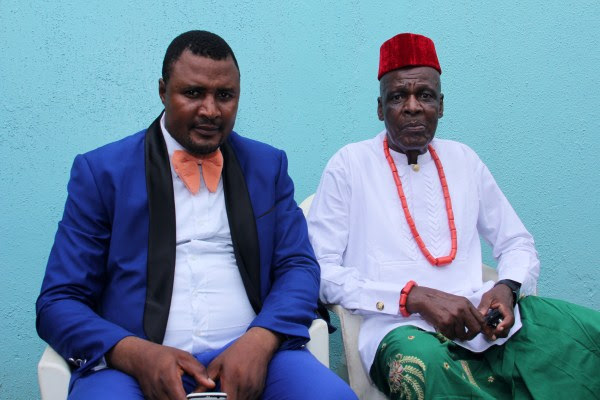
The Generous, Carefree Man Who Taught Me Another Way to Measure a Life
By Kingsley Obi Lekan, PhD
My father's official year of birth is 1937.
He could be older.
Like many people of his generation whose births were not necessarily documented contemporaneously, the year that eventually entered official records may not tell us precisely when his life began. So 1937 is the date I accept for official purposes, while acknowledging the uncertainty surrounding it.
I have known him simply as my father.
Others know him as Apollo 13.
And for much of my life, there was something about this man I could not completely understand:
Why did my father smile so much?
He could experience a setback and move on. He could encounter people with an enthusiasm that made every greeting appear important. He could spend money with a generosity that frightened those of us who thought tomorrow deserved considerably more financial preparation.
Yet somehow, he seemed content with today.
As a younger man, I sometimes saw these things as weaknesses.
Age has complicated my judgement.
I am beginning to wonder whether my father understood something about living that took me much longer to learn.
Before He Became My Father
Long before I was born, Emmanuel Kejuo Lekan was already making his way through a Nigeria very different from the one I know today.
According to our family history, he joined the Eastern Nigeria Development Corporation in 1960 as an office clerk. He later became a storekeeper and eventually moved into field operations.
His working life became intertwined with the government agricultural establishments of the old Eastern Region and, subsequently, Cross River State.
Ikom Cocoa Estate. Agbokim Waterfalls. Effraya. Abia/Bendeghe. Boje.
These were not merely names on a map to us.
They were places around which family life revolved.
My father's diligence as a storekeeper reportedly led his manager, Ejikeme, to recommend that he move into field work, where opportunities for advancement were greater.
At one stage, he and his colleague and neighbour, Asu Abang, were given responsibility for what our family remembers as an attempt to “open” a large government agricultural project at Boje.
Then life intervened.
A few months after I was born, my father was involved in a serious accident.
He was incapacitated for more than eighteen months.
Careers do not wait for injured men.
While he was recovering, colleagues continued progressing. People travelled for further training. Qualifications were acquired. Promotions occurred. Institutions changed.
My father eventually returned.
But sometimes when a man returns to work, he does not return to the same world he left.
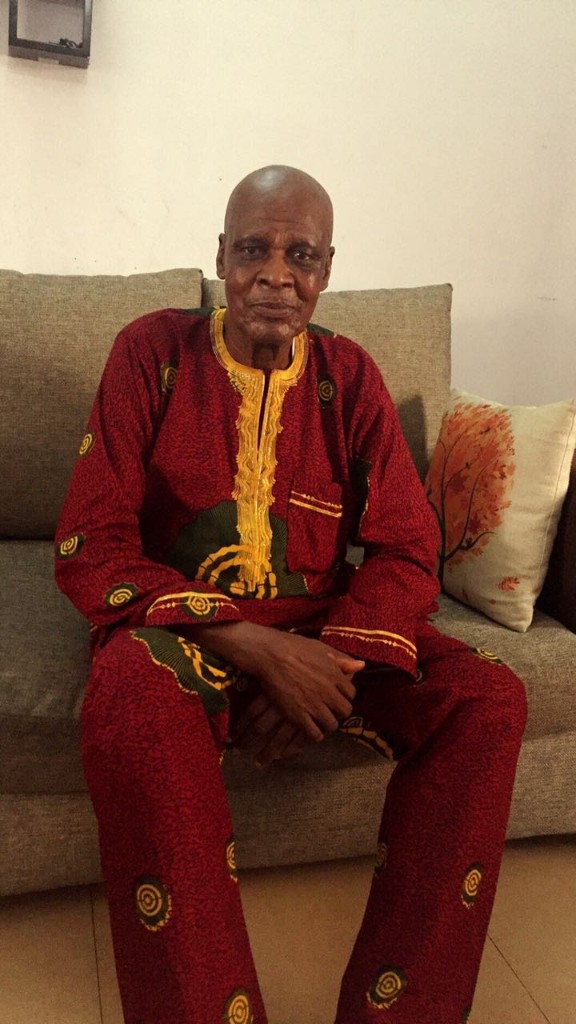
The Man Who Survived
Perhaps I should have understood his smile from that alone.
He had survived.
I was too young when the accident happened to understand what it did to him professionally, financially or psychologically. I grew up seeing the man who emerged on the other side.
And that man enjoyed people.
He seemed to possess an unusual capacity for refusing to allow yesterday's disappointment to destroy today's opportunity for happiness.
This did not mean that everything went well for him.
It did not.
His career had disappointments. Younger and more formally educated professionals eventually moved into positions of authority within institutions where men of his generation had acquired their knowledge largely through decades of practical experience.
He could find himself advising people who officially outranked him.
As his son, that sometimes bothered me.
Perhaps it bothered me more than it bothered him.
A Man Who Believed in Education
One of the contradictions I find interesting about my father is that although his own advancement came largely through experience, he understood the importance of education.
He helped raise children in an era when having several university graduates in one family was by no means something to take for granted.
I remember a younger manager expressing admiration that my father already had two graduate children while I was on my way to becoming the third.
That mattered to him.
Education represented something he wanted his children to possess, perhaps partly because he had experienced the limitations that could eventually confront a man whose enormous practical knowledge was not accompanied by the newer academic qualifications institutions increasingly demanded.
There is a lesson in that which has followed me into adulthood:
Experience is invaluable, but every generation must prepare itself for the credentials, knowledge and tools by which its own era measures competence.
My Mother and the Other Side of His Story
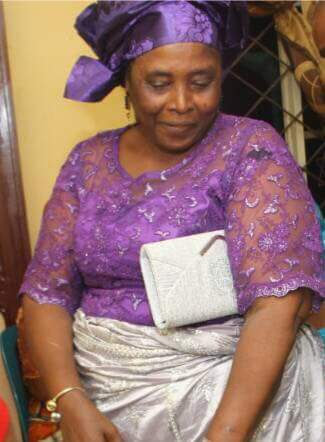
No truthful portrait of my father, Emmanuel Kejuo Lekan (Apollo 13), can be written without acknowledging my mother, Mrs. Agnes Obuh Obi (née Lekan), affectionately known as Madam Agi, whose resilience, hard work and contributions to our family deserve recognition in their own right.
My father's generosity and carefree approach to life did not exist in isolation. Family life has consequences, and someone often carries the practical weight of another person's temperament.
My mother stayed through difficult years.
She raised children.
She farmed.
At one stage, her farm at Road 11 in the cocoa estate, between Effraya and Etomi, was larger than my father's. Her harvests of plantain, banana, maize and other crops contributed materially to family life.
When I was younger, I saw my father's personality primarily from the perspective of a son.
As an adult, I can also see that the freedom with which one spouse approaches life may require discipline and resilience from the other.
My parents were different people.
Perhaps that difference was part of how the family survived.
A Man Who Could Not Save for a Rainy Day
If I am going to write truthfully about my father, I cannot turn him into a saint simply because he is my father.
Apollo 13 was not the man from whom I would learn the principles of aggressive financial accumulation.
Saving for a rainy day did not appear to excite him.
There were occasions when I wished he would think more about tomorrow.
A major burial or community event could transform him.
He would attend properly.
The refrigerator would be stocked with drinks. Palm wine would be purchased for those who preferred it. The generator could run until daybreak.
People would drink.
People would talk.
People would laugh.
And my father would be in his element.
The economist in me might now calculate what all that money could have become if invested.
The son in me remembers something else:
people wanted to be around him.
Perhaps He Was Rich in Another Currency
Whenever we returned to the village, something interesting happened.
My father supplied drinks generously.
Our kinsmen supplied food generously.
Different dishes could cover the floors of our rooms. People brought food without being asked. Nobody appeared to be keeping a ledger of who owed whom.
My father gave.
Others gave.
As a child, I simply enjoyed it.
As an adult, I recognise a form of social economy that is becoming harder to reproduce.
It was not perfect.
It could place enormous obligations on people who had regular income. Extended-family expectations could consume resources that might otherwise have been saved.
But it also produced something our increasingly individualised lives sometimes struggle to recreate:
belonging.
My father might not have accumulated everything I thought he should have accumulated.
But perhaps I was using only one accounting system.
There are bank balances.
There are properties.
There are investments.
And then there is another kind of wealth:
People who are happy when you arrive.
People whose children know your name.
People willing to bring food into your house.
People you helped when they needed their first opportunity.
People who remember that your door was once open to them.
I am not suggesting that goodwill should replace financial prudence.
I am saying that a complete balance sheet of a human life may require more than money.
His House Was Never Entirely His
My father built what our family remembers as the first zinc-roofed house in our community around 1965.
Even the construction of that house tells me something about the world he inhabited.
Community members participated.
People helped mould blocks. Planks were carried from the bush. There was collective excitement around the project.
And after the house was built, its doors did not close around the nuclear family.
Relatives stayed there.
Kinsmen stayed there.
Visitors stayed there.
People seeking opportunity found temporary accommodation there.
His first cousin John had a room available to him whenever he came home.
Years later, the same pattern followed us around the agricultural estates.
Our house filled with people.
Some came from the village looking for work.
My father helped some into employment.
They stayed with us until they found their feet.
Others arrived through my mother's family.
As I wrote in an earlier memoir, The House That Felt Like a Village:
We were not living in the village, but sometimes it felt as though the village was living in our house.
I now realise that this was not accidental.
It reflected the kind of man my father was.
He Helped People Find Their Footing
One of the things I increasingly appreciate about my father is that his employment was not treated solely as his personal escape from poverty or rural life.
He used his position to bring other people closer to opportunity.
One of those people was his kinsman Albert Ojong Achu, whom he helped into service at the Estate and who, during my father's incapacity, sometimes collected his salary and brought it to him.
There were others.
Some stayed in our house first.
As a child, I had no vocabulary for what was happening.
Today, after spending much of my own adult life around employment, recruitment and opportunity creation, I recognise the pattern.
Someone obtains access.
He reaches backwards.
Another person enters.
That person begins earning.
Another household changes.
Opportunity travels through relationships.
It is one of the oldest employment networks in Africa.
Long before technology platforms attempted to formalise such connections, families and communities were doing it informally.
I grew up watching it happen.
When Experience Became Advisory
As my father grew older, the institutions around him changed.
University graduates entered management.
Professional qualifications increasingly mattered.
Younger men became project managers.
My father, with decades of practical experience, could increasingly find himself in an advisory position rather than at the centre of authority.
When people encountered difficulties, they could still consult him.
He knew the work.
But knowing the work and holding the office were no longer necessarily the same thing.
When I was younger, I could interpret this as an injustice against my father.
Age has made me more cautious.
Every generation eventually encounters the generation coming behind it.
The younger generation arrives with different education, different language, different tools and different assumptions.
Sometimes it respects what came before.
Sometimes it doesn't.
But it arrives regardless.
The lesson for me was not that young people should be prevented from advancing.
It was that experience must find a way to transfer itself before institutions decide they no longer need the people carrying it.
That lesson has relevance far beyond my father's career.
Cocoa, Retirement and His Own House
Eventually, Ikom Cocoa Estate was privatised.
My immediate elder brother, Lekan K. Lekan, who was establishing himself in Lagos, sent money, and my father acquired a hectare.
For a period, cocoa became his own business rather than simply the crop of the institution for which he had worked.
He made money from his cocoa.
He eventually received his retirement benefits.
And he built a residential bungalow on his plot in Ikom urban.
By the time our family's long association with the Estate quarters was ending, he had somewhere of his own to go.
There is something satisfying about that.
A man who had spent much of his working life helping operate other people's agricultural projects eventually harvested cocoa from his own holding and retired to his own home.
The Father and His Sons
Children grow up thinking their parents are permanent.
Then one day the relationship changes.
The father who once carried responsibility for everyone becomes the elderly man standing among adult sons.
The children who depended on him become men with households, careers, responsibilities and grey hairs of their own.
And suddenly a family photograph contains decades.
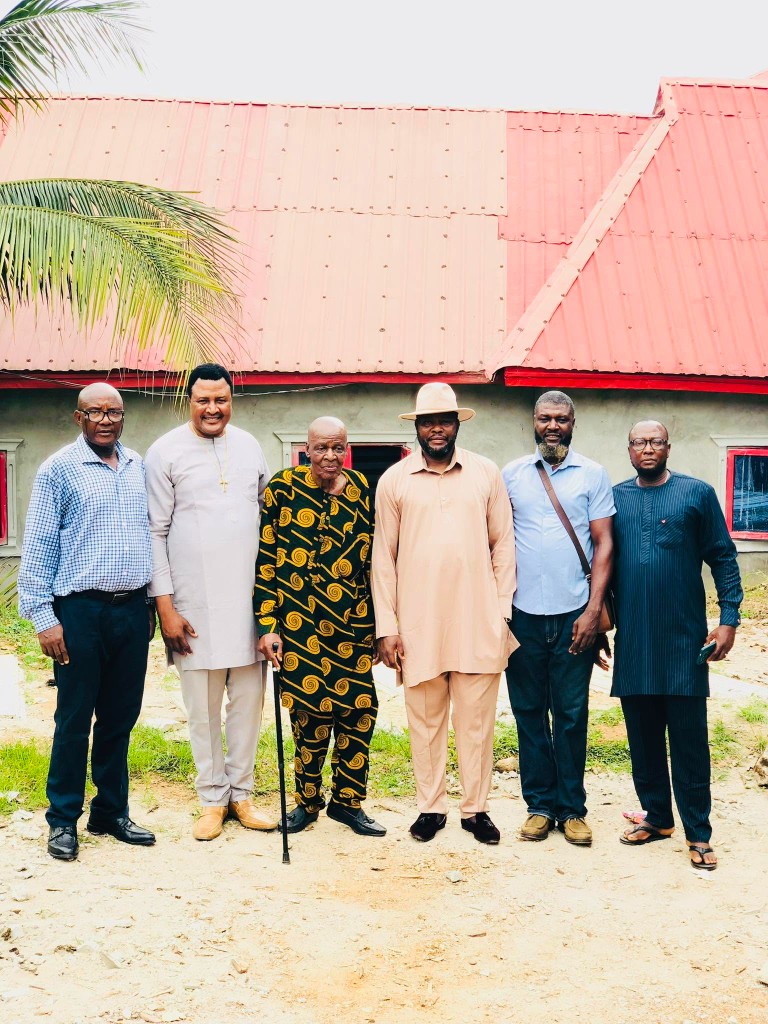
When I look at such a photograph today, I do not merely see a father surrounded by his children.
I see continuity.
I see the young office clerk of 1960.
The storekeeper.
The field worker.
The accident survivor.
The agricultural-estate employee.
The man whose house filled with relatives.
The man who bought palm wine as though tomorrow had promised to finance itself.
The father who valued education.
The retiree.
And now, the elder.
All of them are the same man.
What I Once Mistook for Carelessness
There are things I would still have preferred my father to do differently.
Love does not require historical revision.
I would have wanted him to save more.
I would have wanted him to protect himself financially against difficult periods.
I would have wanted the enormous goodwill he extended to others always to be matched by equal attention to his own long-term security.
Those are legitimate lessons from his life too.
But there is another danger in judging our parents:
we can evaluate them entirely according to the values we acquired after leaving the world in which they lived.
My father's generation understood community differently.
Success was not always measured by how effectively one insulated oneself from the financial needs of relatives.
Sometimes being successful meant that people could come to you.
Sometimes the evidence that you had “made it” was precisely that others could eat from what you had.
There were costs to that culture.
There was also beauty in it.
Both things can be true.
Why Did My Father Smile So Much?
I return to the question with which I began.
Why did my father smile so much?
I still don't know completely.
Perhaps temperament explains some of it.
Perhaps surviving a terrible accident changed his relationship with worry.
Perhaps he simply discovered early that carrying resentment does not make a burden lighter.
Perhaps he understood that a man can spend his entire life preparing to live and reach the end without having enjoyed very much of it.
Or perhaps Apollo 13 was simply Apollo 13.
What I do know is that as I grow older, I find myself reconsidering some of the qualities I once criticised.
There is intelligence in planning.
There is wisdom in saving.
There is dignity in ambition.
But there is also wisdom in knowing when to laugh.
There is wealth in friendship.
There is dignity in helping another person find work.
There is something profoundly human about making people feel welcome.
And there is freedom in refusing to carry every disappointment forever.
The Balance Sheet of a Life
If I were to prepare the balance sheet of my father's life today, I would not ignore the financial columns.
They matter.
But I would add others.
Children educated.
People helped into employment.
Relatives accommodated.
Kinsmen welcomed.
Communities remembered.
Setbacks survived.
Food shared.
Palm wine poured.
Laughter generated.
Grudges not carried forever.
And perhaps the most important:
A family that still knows his story.
My father's official year of birth is 1937.
He could be older.
But the more important measurement now is not simply how many years he has lived.
It is what those years have contained.
For much of my life, I thought I was observing a carefree man who did not worry enough about tomorrow.
Today, I see something more complicated.
I see a man who worked.
A man who survived.
A man who helped others.
A man who made mistakes.
A man who raised children.
A man who enjoyed people.
And a man who smiled.
Emmanuel Kejuo Lekan — Apollo 13 — is my father.
There are things about his life I would have done differently.
There are things about mine he probably would have done differently too.
That is the privilege of generations.
We inherit.
We question.
We correct.
And, eventually, we understand.
I am still understanding him.
And the older I become, the more grateful I am that I have had the opportunity to do so while he is still here.
I am proud to be his son.
Author's Note
This is a son's memoir of his father, not an authorised institutional history. Details concerning Emmanuel Kejuo Lekan's early employment, the Eastern Nigeria Development Corporation, government agricultural projects, estate assignments and related events are drawn substantially from family recollection and personal memory unless otherwise documented.
His official year of birth is recorded here as 1937, while acknowledging the family's uncertainty as to whether he may have been born earlier.
The purpose of preserving these memories is not to present one man's life as perfect, but to record something of the work, family networks, community obligations and values through which one generation lived—and what a son has come to understand about them with age.
Kingsley Obi Lekan, PhD
Founder, Afruniverse
Further Reading
The related Founder’s Archive memoir, The House That Felt Like a Village, is a personal account of growing up around family, work and the agricultural estates of old Cross River.
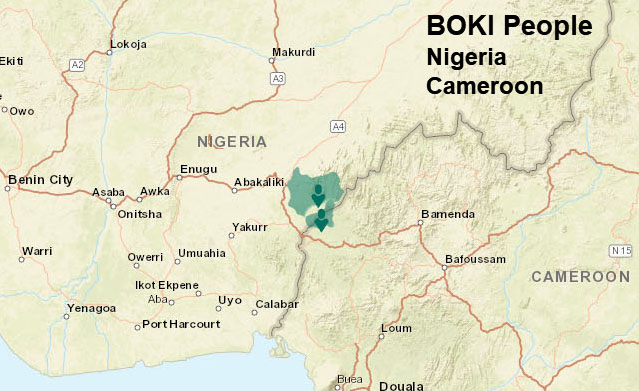
The related Founder’s Archive chronology, A Chronology of Bokyi History, is a developing historical record of the Bokyi people, their communities and the territory that later became Boki Local Government Area.
Continue in the archive

Before the Employment Agency
Kingsley Obi Lekan recounts the journey from Entertainment World International and Nollywood through teaching, early employment-agency work, EWIL Consulting and the incorporation of Capt Kingsley Consulting Limited.
The House That Felt Like a Village
Kingsley Obi Lekan reflects on growing up around family, work and the agricultural estates of old Cross River, and how those early experiences shaped his understanding of opportunity, community and employment.
A Chronology of Bokyi History
A developing chronology of Bokyi history from colonial contact and Native Courts to the creation of Boki Local Government Area, preserving verified records, community history and questions requiring further research.