A Chronology of Bokyi History
A developing chronology of Bokyi history from colonial contact and Native Courts to the creation of Boki Local Government Area, preserving verified records, community history and questions requiring further research.
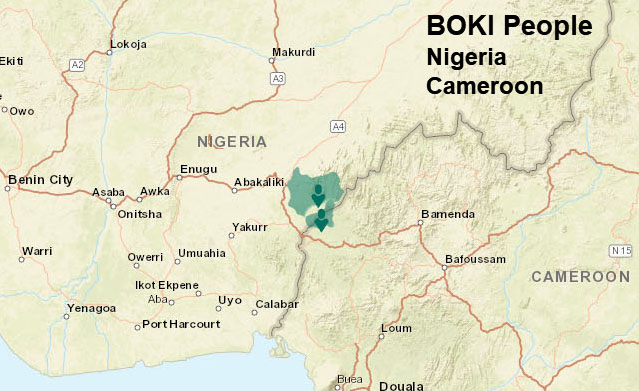
People, Land, Institutions, Culture and Development — 1908 to the Present
This chronology is a developing historical record of the Bokyi people, their communities and the territory that later became Boki Local Government Area.
Some of the early dates reproduced here originate from a locally circulated historical chronology formerly associated with Boki Blog. The original Boki Blog website is presently unavailable, and several of its early entries still require corroboration from archival, academic, missionary, church, court or other primary records.
Rather than discard these community historical records, this chronology preserves them while clearly distinguishing between independently corroborated history, locally documented accounts, oral history and disputed accounts.
The record will be corrected and expanded as additional evidence becomes available.
Editorial note
Boki Local Government Area itself was created only on 28 August 1991, with Boje as its headquarters. Events occurring before 1991 should therefore be described as events in Bokyi history, or as events in the communities and territory that later formed Boki Local Government Area. They should not be described as events of the Local Government Area as an administrative institution, because that institution did not yet exist.
This is a living record. Where evidence is incomplete, that incompleteness is stated. Locally inherited dates are not converted into established historical facts merely because they are familiar or plausible. Oral testimony is treated as testimony. Disputed accounts are left in the open rather than silently resolved. Evidence classifications in this chronology can change as new material becomes available. A locally documented [B] entry may be raised to [A] when an archival document or a named, citable independent scholarly source is subsequently located and recorded here.
The related Founder’s Archive essay, Clarification of Bokyi Naming Debate, examines the historical and linguistic questions surrounding the names Boki and Bokyi and proposes a wider programme of documentation, standardisation and preservation.
How to read the evidence classifications
Each entry below carries one of four classifications:
[A] Independently corroborated. Supported by credible primary records, academic scholarship, official institutional records, or other sufficiently authoritative independent evidence.
[B] Locally documented. Appears in inherited or local Bokyi historical material, including the historical chronology formerly published or circulated by Boki Blog, but has not yet been independently corroborated.
[C] Oral history / community memory. Preserved through identifiable family or community testimony, but not yet independently established by documentary evidence.
[D] Disputed / alternative accounts. Used where credible sources or community traditions provide materially different versions of an event.
A mixed label such as [A/B] means that part of the entry is independently established while another part remains locally documented, or that two formulations of the same transition have not yet been fully reconciled.
[B/AWAITING CITATION] means the date or event appears in inherited or local material, and independent scholarly corroboration has been reported, but the bibliographic citation is not yet recorded in this article. Until that citation can be named here, the entry is not classified as independently corroborated.
These labels are provisional. They are intended to remain correctable rather than to present this chronology as a finished definitive history.
Chronology
1908 — Frank Hives expedition into Oku territory
[B — Locally documented]
The inherited Bokyi chronology records an invasion or expedition into Oku land, north of Nwul, by the British colonial officer Frank Hives and his team in 1908.
Frank Hives was a real British colonial administrator and District Commissioner who served in Nigeria during the colonial period. The specific claim that his 1908 expedition entered or invaded Oku land remains locally documented until the event itself is corroborated by an independent archival or scholarly source.
This entry does not establish that a single 1908 expedition created British rule over Bokyi territory. That larger conclusion would require evidence of its own.
Who was Frank Hives?
Frank Hives was a British colonial administrator and District Commissioner who served in Nigeria in the early twentieth century. His experiences were later recounted in Ju-Ju and Justice in Nigeria, told by Frank Hives and written down by Gascoigne Lumley, and published in London by John Lane in 1930.
The memoir is useful as a colonial-era source. It represents the perspective of a British colonial official. It should therefore be read alongside Bokyi oral histories, administrative records, missionary and church sources, and modern historical scholarship. It is not a neutral or definitive account of African or Bokyi society, and it should not be used to romanticise colonial administration.
Whether the 1908 Oku expedition appears in Hives’ own writings or in surviving colonial records remains an open research question.
1910 — Early colonial presence in the Ogoja region
[B — Locally documented / partially corroborated context]
The inherited chronology describes 1910 as the “arrival of the first white man at Ogoja.”
That wording is preserved here as part of the inherited account. It is not presented as an independently established fact. The phrase “first white man” is a community historical formulation, not a verified statement of first contact.
What can be said more securely is contextual. British colonial administration was expanding through the wider Upper Cross River and Ogoja region during this period. Parts of Bokyi territory subsequently became connected to administrative structures associated with Ogoja. The inherited 1910 date may refer to a particular local arrival, an administrative visit, or a remembered first encounter. What exactly it refers to has not yet been established from primary evidence.
1912 — Native Court at Obudu
[B/AWAITING CITATION]
The inherited chronology and later reports of historical scholarship place a Native Court at Obudu in 1912, during the colonial administrative period associated with Frank Hives.
This is regional context rather than a Bokyi-court founding date. It would help explain the later expansion of the Native Court system that affected Bokyi communities. The specific bibliographic citation supporting the 1912 date is not yet recorded in this living record, so the entry is not classified here as independently corroborated.
1914 — Twelve-man colonial tour
[B — Locally documented]
The inherited Boki/Bokyi chronology records that a group of twelve white men toured the Boki area in 1914.
The entry is preserved. The purpose of the tour is not stated here, because the inherited account does not establish it and no independent source consulted for this record identifies the party or its instructions.
1914 was also the year of the amalgamation of Northern and Southern Nigeria and the beginning of the First World War. Those are established facts of wider Nigerian and world history. They supply context only. This record does not claim that the twelve-man tour was an intelligence mission, that it was organised because of German Kamerun, that it mapped population centres, or that it directly caused the creation of Native Courts in 1915 or 1916. Those propositions require evidence.
1915 — Ibong Native Court
[B/AWAITING CITATION]
The inherited chronology places the establishment of Ibong Native Court in 1915. Later reports of historical scholarship have been said to support that date.
Those reports of scholarship describe its jurisdiction as including communities such as Bette, Bendi, Alege, Ukpe, Otugwang, Bobang, Alankwo and Irruan.
The inherited Bokyi chronology states that the court served Irruan and Eastern Boki.
The two descriptions overlap at Irruan, but they are not identical. This record preserves both formulations rather than silently combining them into a single list. The specific bibliographic citation for the scholarly formulation is not yet recorded here, so the 1915 date is not classified as independently corroborated in this article. Further archival work is needed to establish how the court’s jurisdiction was defined in the original instruments and how later community memory summarised that jurisdiction.
1916 — Abo and Boje Native Courts
[B — Locally documented]
The inherited chronology records the establishment of Abo and Boje Native Courts in 1916.
That founding date remains locally documented until independent archival or scholarly corroboration is located.
[C — Oral history / community memory] Independent family oral history also confirms that Abo Court was functioning by 1971. A family account preserved by the author records the use of Abo Court in that year for the formal return of bride price following the dissolution of a customary marriage contracted before 1960. The testimony corroborates the court’s later existence, but does not independently establish the reported 1916 founding date.
See also the 1971 entry below.
1918–1920 — Early motor road development
[B — Locally documented]
The inherited chronology records the opening of the Ogoja–Okundi–Nsadop–Iso-Bendeghe–Afi–Ikom motor road.
The route and the 1918–1920 dating are preserved as locally documented pending independent corroboration from colonial public-works records, maps or other archival sources.
1921 — Irruan and the Native Court system
[A/B — scholarly corroboration reported; bibliographic citation pending]
The inherited chronology states: “Irruan left Bette Native Court.”
Historical scholarship has been reported as providing a more specific formulation: the colonial court system was further decentralised and a court was established at Irruan in 1921.
Both formulations may describe aspects of the same administrative transition. One emphasises departure from an earlier court; the other emphasises the creation of a local court. The inherited wording is preserved. The scholarly formulation is recorded as reported, but the bibliographic citation is not yet named in this living record. Further archival work could clarify the exact sequence — whether Irruan’s cases were previously heard at a Bette-associated court, at Ibong, or under another arrangement, and how the 1921 Irruan court was constituted.
1922 — Okundi Customary Court Hall
[B — Locally documented]
The inherited chronology records construction of the Okundi Customary Court Hall in 1922.
1923 — St Francis School, Ntamante
[B — Locally documented]
The inherited chronology records the establishment or construction of St Francis School, Ntamante, in 1923.
Church and school records, if they survive, would be the natural place to corroborate this date.
1924 — Abontakon (Biakwan) School
[B — Locally documented]
The inherited chronology records the opening of a school at “Abontaken” in 1924. The place name has been corrected here to Abontakon (Biakwan); “Abontaken” is regarded as an erroneous spelling. The reported 1924 opening date remains subject to independent documentary verification.
1924–1925 — Osokom / “Ibagari” episode
[B — Locally documented; unverified/sensitive]
The inherited chronology records a violent episode involving people identified in the source as “Ibagari” from Cameroon and Osokom people, followed by the execution of twelve Osokom people at Okundi.
This entry is treated as an important archival research lead, not as a settled reconstruction of events. The reported executions are not independently established in this record.
The identity represented by the historical term “Ibagari” requires investigation and is not inferred here. The circumstances of the killings require verification. The alleged execution of twelve Osokom people should be investigated through colonial judicial and administrative records.
This record does not assert guilt, reconstruct motives, or describe the legal process of any execution, because those facts have not been established from documentary evidence.
1928 — Colonial taxation
[B — Locally documented]
The inherited chronology records the introduction of taxation in 1928.
The entry is preserved. The precise instrument, the administrative unit in which the tax was introduced, and the form of assessment have not yet been independently established for Bokyi territory.
1930 — Rubber and palm production
[B — Locally documented]
The inherited chronology states that Bokyi people were compelled under colonial administration to tap rubber and produce palm oil and palm kernels.
The claim is preserved. Compulsion, the crops named, and the date should not be overstated until corroborated by colonial agricultural, forestry or administrative records.
1930 — Frank Hives’ memoir
[A — Independently corroborated]
Frank Hives’ colonial memoir, Ju-Ju and Justice in Nigeria, told by Frank Hives and written down by Gascoigne Lumley, was published in 1930.
The book is a dated, identifiable colonial-era publication. Its value as a source is real, and so are its limits. It records a British colonial official’s recollections and interpretations. Those interpretations of African society, including any account of the Cross River region, should be examined critically and placed beside indigenous oral histories and other records. They should not be treated as a complete or impartial history of Bokyi people.
1931 — Locust invasion
[B — Locally documented]
The inherited chronology records a locust invasion affecting parts of Bokyi territory.
1931 — Boje Customary Court Hall
[B — Locally documented]
The inherited chronology records construction of the Boje Customary Court Hall.
1937 — Kakwagom leper settlement
[B — Locally documented]
The inherited chronology records establishment of the Kakwagom leper settlement.
The historical name is quoted as it appears in the inherited source. In explanatory terms, the institution may be understood as a leprosy treatment and settlement facility. Medical-mission, church or colonial health records would be the appropriate place to corroborate the date and the character of the facility.
1940 — St Patrick’s School, Kakwagom
[B — Locally documented]
The inherited chronology records that St Patrick’s School, Kakwagom, described as the parish’s only senior primary school, was transferred from Hill Top to its present site.
1940 — Wula administrative transfer
[B — Locally documented]
The inherited chronology records that Wula was separated from Ikom Division and joined Obudu.
The inherited wording is preserved. The administrative instrument effecting the transfer has not yet been identified in this record.
1943 — Nsadop–Boje land dispute
[B — Locally documented]
The inherited chronology records a Nsadop–Boje land dispute in 1943.
No further details of the dispute — its cause, parties beyond the two named communities, court, or outcome — are added here, because the inherited account does not supply them and they have not been independently established.
The entry does, however, mark something that recurs throughout Bokyi history: land, boundaries and the institutions through which disputes are heard. That longer pattern is taken up in the section on land, boundaries and peace below. The 1943 record is not presented as the same dispute as any later conflict.
1944 — Utugwang–Irruan road
[B — Locally documented]
The inherited chronology records construction of the Utugwang–Irruan road.
1945 — First motor vehicle recorded in Abo
[C/B — Community historical record]
The inherited chronology states that the first motor vehicle was seen in the Abo area in 1945.
This is preserved as a local historical recollection: the first vehicle remembered, or recorded in that inherited chronology, in the Abo area. It is not a claim that no vehicle had ever entered the area before that date.
1947 — Lunar eclipse
[B — Locally documented]
The inherited chronology records a lunar eclipse in 1947.
Astronomical records may eventually allow the precise eclipse and date to be independently checked. Until that comparison is made, the entry remains locally documented.
1952 — Balegatte administrative transfer
[B — Locally documented]
The inherited chronology records that Balegatte villages were separated from Wula in Eastern Bokyi clan and joined Utanga-Becheve clan.
The inherited clan and place-name wording is preserved. The administrative instruments documenting the transfer remain to be located.
1962 — Boki Farm Settlement
[A — Independently corroborated]
The Boki Farm Settlement was established at Borum in 1962. Academic work on Eastern Nigerian agricultural policy records the Boki settlement among the regional farm-settlement schemes, with a start date of November 1962 and oil palm and citrus as the planted crops. That existence and date are classified [A] on the basis of that named scholarship.
The settlement is important in the later agricultural history of the area, particularly oil-palm production, and it later became associated in public discussion with the Boki Oil Palm Estate. Published local reporting has named neighbouring communities, including Irruan, Osokom, Okundi and Borum, in connection with the estate. Those later accounts are useful leads. They are not independently corroborated land-acquisition facts in this record, and they are not classified [A].
This entry does not reconstruct how land was acquired, what compensation was paid, or how later landlord claims should be decided.
1967 — South-Eastern State
[A — Established national history]
With Nigeria’s state-creation exercise of 1967, the territory containing present-day Boki became part of South-Eastern State.
This is a change in the wider Nigerian administrative map. It is not the creation of Boki Local Government Area.
1971 — Abo Court oral-history evidence
[C — Oral history / community memory]
Family oral history records that a customary marriage had been contracted before 1960, and that Abo Court was used in 1971 for the formal return of bride price. This supports the existence and functioning of Abo Court by 1971. It does not establish the claimed 1916 founding date.
The 1916 entry above records the inherited founding date, with a brief cross-reference to this later testimony.
1976 — Cross River State
[A — Established national history]
South-Eastern State was renamed Cross River State in 1976.
The Bokyi communities and territory discussed in this chronology thereafter lay within Cross River State. Boki Local Government Area still did not exist as a named local-government unit.
28 August 1991 — Creation of Boki Local Government Area
[A — Independently established administrative date]
Boki Local Government Area was created on 28 August 1991, with Boje as its headquarters.
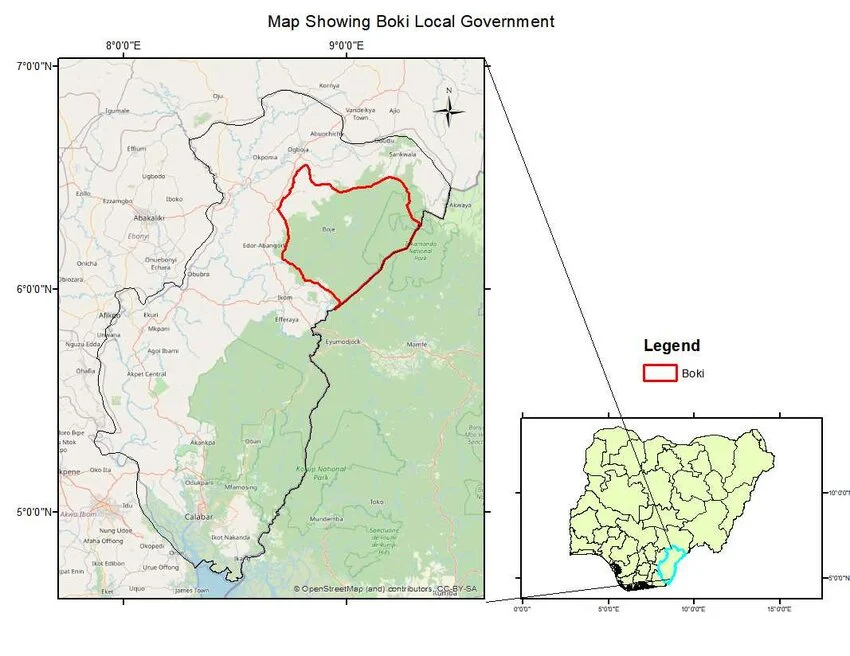
This chronology records 28 August 1991 as an independently established administrative date. It does not claim that the original creation gazette or statutory instrument has been examined for this entry.
This is the principal administrative milestone in the later part of the chronology. It is the reason the pre-1991 entries are more accurately described as Bokyi history, and as the history of the communities and territory that later formed Boki Local Government Area, rather than as the history of the Local Government Area itself.
The official governmental name of the Local Government Area is Boki. That administrative fact does not, by itself, settle the historical and linguistic questions examined in Clarification of Bokyi Naming Debate.
2006 — National Population Census
[A — Official / institutional]
The official 2006 census population figure recorded for Boki Local Government Area is 186,611.
Older unofficial estimates, including much larger round figures that have circulated in descriptive writing about Boki, are not official census figures and are not repeated here as population facts.
2015 — First banking institution reported in Boki LGA
[A/B — Published contemporary report]
In November 2015, CrossRiverWatch reported that UNICAL Microfinance Bank had commenced operations in Boki and described the opening as the first banking institution in the Local Government Area since its creation.
The wording belongs to that contemporary published report. This chronology records that a newspaper report in November 2015 presented the UNICAL Microfinance Bank opening in those terms. It does not convert the reporter’s wording into an eternal fact that no other banking activity could ever have existed, or that the description remains accurate in later years without further checking.
Land, boundaries and peace in Bokyi history
The 1943 Nsadop–Boje entry is one early local reminder that land and boundaries have been a recurring subject in Bokyi historical memory. Recurring land disputes, in Bokyi communities as elsewhere, demonstrate the need for durable dispute-resolution systems. This section does not treat any modern dispute as a continuation of that 1943 record. It draws a longer institutional lesson.
Peaceful settlement of land questions depends on process as much as on memory. A durable system should include:
- independent fact-finding;
- transparent selection of mediators or arbitrators;
- conflict-of-interest safeguards;
- documentary evidence and witness testimony;
- written settlement agreements;
- permanent custody and preservation of those agreements;
- professional land surveying;
- GIS mapping;
- physical boundary markers where appropriate;
- documented village and community boundaries;
- accessible historical boundary records;
- peaceful dispute resolution;
- compliance with Nigerian law;
- appropriate involvement of lawful governmental and judicial institutions where required.
Traditional rulers, elders and community institutions can play important mediation and reconciliation roles. Those roles deserve respect. Durable settlements should still be documented, preserved, and operated within Nigerian law. Traditional institutions should not be asked to exercise powers they do not lawfully possess.
This record does not endorse declarations of war, retaliatory violence, vigilante enforcement, unlawful punishment, or coercive social exclusion as methods of settling land questions.
GIS mapping of village and community boundaries would also serve a wider documentary purpose. The related Founder’s Archive essay on the Boki–Bokyi naming debate proposes an authoritative Bokyi Gazetteer: a systematic record of communities, indigenous names, spellings, pronunciation, meaning, dialect area, coordinates and historical variants. Boundary mapping and a gazetteer belong together. One without the other leaves names unlocated, or maps unnamed.
Land, economy, culture and environment
Inherited descriptive writing about Boki/Bokyi has long emphasised the agricultural and forest character of the territory. That emphasis is a source lead for future research, not a finished ethnography.
Bokyi/Boki country has been described as important for cocoa, coffee, palm products and forest resources, and as a place of traditional markets and communal farming. Age-grade institutions, cultural festivals, and traditional music and dance forms are part of the same inherited picture. So is a concern for forest conservation and biodiversity in a territory that borders Cameroon and contains substantial forest.
Specific cultural names appearing in inherited descriptive material are preserved here so that they are not lost before they can be checked with communities and with ethnographic or linguistic scholarship. They include:
- Obam
- Mgbe
- Atam
- Obon
- Bekarim
- Awaribo
- Obashi
- Enya-Atu
Inherited material also refers to New Yam celebrations, the Edien festival, Borum-related festival traditions, a cassava festival, and traditional market days.
These names and festival references are recorded as community historical vocabulary requiring community and ethnographic verification where no authoritative source has yet been established. They are not converted here into a complete or official inventory of Bokyi cultural institutions.

Boki Blog as a source history
A historical chronology and descriptive material about Boki/Bokyi were previously circulated through Boki Blog / Boki Blog Africa. That former publication is treated here as a source lead. The original historical article is presently unavailable as an archive source.
Where the former Boki Blog domain still resolves, it presents a hosting or domain-development page rather than the historical chronology. That current page is not the inherited article and is not cited here as evidence.
This Founder's Archive entry therefore does not create a live citation pretending that the old article is still available. It preserves the inherited text as a historical source lead. Where archived copies, social-media copies, or independent sources exist, they should be used carefully and identified as what they are.
Screenshots of machine-generated search summaries or AI-generated answers are not historical evidence and are not used in this record.
Questions still requiring historical investigation
1. Can the 1908 Frank Hives expedition into Oku be located in colonial records or in Hives’ own writings?
2. What exactly does the 1910 “first white man at Ogoja” tradition refer to?
3. Who were the twelve Europeans recorded as touring Bokyi territory in 1914, and what was the purpose of the tour?
4. Can the 1916 founding dates of Abo and Boje Native Courts be independently established?
5. What surviving Native Court registers exist for Ibong, Abo, Boje, Irruan and Okundi?
6. What was the identity of the people called “Ibagari” in the 1924–25 account?
7. Can colonial judicial records establish what occurred at Osokom/Okundi and the reported execution of twelve people?
8. Can the 1918–1920 road-construction dates be verified?
9. What documentary evidence survives concerning colonial rubber and palm-production policies in Bokyi territory?
10. What records survive concerning the 1943 Nsadop–Boje land dispute?
11. Can the 1947 lunar eclipse entry be matched to astronomical records?
12. What administrative instruments document the 1952 Balegatte transfer?
13. What church and school records survive for St Francis Ntamante, Abontakon (Biakwan) School and St Patrick’s Kakwagom?
14. What historical maps can establish changes to Bokyi village, clan and administrative boundaries?
A call to preserve historical evidence
Bokyi families, elders, researchers, churches, schools and traditional institutions are invited to preserve historical evidence and, where they are willing, to share copies for this living record.
Materials that help include:
- old photographs;
- court papers;
- marriage and bride-price records;
- school certificates;
- church registers;
- tax receipts;
- land agreements;
- survey plans;
- old maps;
- letters;
- diaries;
- colonial documents;
- traditional histories;
- recordings and interviews with elders;
- photographs of historic buildings and court halls.
Family records can corroborate the existence and use of institutions even when they cannot establish the institution’s original founding date. The Abo Court testimony is the example already on this page: a 1971 bride-price matter shows that the court was in use by that year. It does not, by itself, prove that the court was founded in 1916. Both facts can be true; only one of them is presently established by that testimony.
The related Founder’s Archive essay, Clarification of Bokyi Naming Debate, examines the historical and linguistic questions surrounding the names Boki and Bokyi and proposes a wider programme of documentation, standardisation and preservation. This chronology is offered as a companion to that work: a dated record of people, land, institutions, culture and development, kept open for correction as evidence grows.
Sources and research notes
This Archive does not use a separate footnote system. The notes below record the source classes used in compiling this living entry. They do not invent bibliography for claims that still rest only on the inherited Boki Blog chronology.
Inherited local chronology. Early dated entries classified [B] derive from a locally circulated Boki/Bokyi historical chronology formerly associated with Boki Blog / Boki Blog Africa. The original historical article is presently unavailable and is not cited as a live page.
Oral history. The 1971 Abo Court testimony is a family oral-history account preserved by the author. It is classified [C] and is used only for the limited conclusion stated in the chronology: that a customary marriage had been contracted before 1960, that Abo Court was used in 1971 for the formal return of bride price, and that the court was therefore functioning by that year. It does not establish a 1916 founding date.
Frank Hives, 1930. Frank Hives and Gascoigne Lumley, Ju-Ju and Justice in Nigeria (London: John Lane, 1930). The publication of the memoir is independently established. The book is a colonial-era source, not a neutral ethnography of Bokyi society. It has not been treated here as proof of the 1908 Oku expedition.
Native Courts, 1912, 1915 and 1921. The Obudu Native Court (1912) and Ibong Native Court (1915) are classified [B/AWAITING CITATION]. Scholarly corroboration of those dates has been reported, but the bibliographic citations are not yet recorded in this article and are not invented here. The 1921 Irruan court is classified [A/B — scholarly corroboration reported; bibliographic citation pending]: the inherited wording is preserved beside a more specific scholarly formulation that still awaits a named citation. General works on Nigerian colonial history are not treated as proof of these specific dates.
Boki Farm Settlement, 1962. The existence and November 1962 start date of the Boki farm settlement, with oil palm and citrus as planted crops, are classified [A] from Chima J. Korieh, The Land Has Changed: History, Society and Gender in Colonial Eastern Nigeria (University of Calgary Press). Later published local reporting has associated Irruan, Osokom, Okundi and Borum with the estate; those land-acquisition details are not classified [A] in this record.
Nigerian administrative history, 1967 and 1976. The creation of South-Eastern State in 1967, and the renaming of that state as Cross River State in 1976, are established facts of Nigerian state creation.
Boki Local Government Area, 28 August 1991. 28 August 1991, with headquarters at Boje, is recorded as an independently established administrative date. This note does not claim that the original creation gazette has been examined for this entry.
2006 census. The figure 186,611 is the official 2006 census population recorded for Boki Local Government Area. It is not an unofficial estimate.
November 2015 banking report. “Boki LGA Gets First Banking Institution,” CrossRiverWatch, November 2015: https://crossriverwatch.com/2015/11/boki-lga-gets-first-banking-institution/. The report is cited as a contemporary published account, including its statement that Boki LGA was created on 28 August 1991 with its capital at Boje and its then-current use of the 2006 census figure.
Culture and economy. Descriptive statements about crops, markets, festivals and cultural institutions in the thematic section are treated as inherited source leads requiring verification. They are not independently established ethnography.
General works on Nigerian colonial history are not cited as proof of specific Bokyi events. Machine-generated search summaries are not sources.
Kingsley Obi Lekan, PhD
Further Reading
The related Founder’s Archive memoir, The House That Felt Like a Village, is a personal account of growing up around family, work and the agricultural estates of old Cross River.
Continue in the archive

Before the Employment Agency
Kingsley Obi Lekan recounts the journey from Entertainment World International and Nollywood through teaching, early employment-agency work, EWIL Consulting and the incorporation of Capt Kingsley Consulting Limited.
Apollo 13: My Father, Emmanuel Kejuo Lekan
Kingsley Obi Lekan reflects on the life of his father, Emmanuel Kejuo Lekan — Apollo 13 — and what his generosity, resilience, work, family and enduring smile have taught him about measuring a life.
The House That Felt Like a Village
Kingsley Obi Lekan reflects on growing up around family, work and the agricultural estates of old Cross River, and how those early experiences shaped his understanding of opportunity, community and employment.