The House That Felt Like a Village
Kingsley Obi Lekan reflects on growing up around family, work and the agricultural estates of old Cross River, and how those early experiences shaped his understanding of opportunity, community and employment.
Growing Up Around Family, Work and the Agricultural Estates of Old Cross River
By Kingsley Obi Lekan, PhD
I was born in a dispensary in Boje, now the headquarters of Boki Local Government Area, about a year after the Nigerian Civil War.
My father, Emmanuel Kejuo Lekan, whom many people knew as Apollo 13, was then working as a field overseer in the government agricultural establishment.
But his journey into that world had begun much earlier.
In 1960, my father joined the Eastern Nigeria Development Corporation as an office clerk. He was subsequently transferred to the stores, where he became a storekeeper.
He once told us what Ikom Four Corners looked like when he arrived there in 1960 to collect supplies. What later became a busy junction and commercial environment appeared to him then almost like a farm settlement—a place where long-distance travellers stopped with their trailers before continuing their journeys.
His responsibilities as a storekeeper placed him close to the physical development taking place around him. He took stock of supplies used for the construction and operation of agricultural establishments and buildings associated with places such as Ikom Cocoa Estate, Agbokim Waterfalls, Effraya and Abia/Bendeghe.
According to the family account handed down to me, his diligence eventually caught the attention of his manager, Ejikeme, who recommended that he move from the stores into field operations, where opportunities for advancement were greater.
That decision would shape not only his working life, but the childhood world into which I was born.
The Boje Experiment
At some point, my father and a fair-complexioned colleague and neighbour, Asu Abang, were given responsibility for what the family remembered as “opening” a large government farm at Boje.
They were referred to as project managers.
The ambition was understandable. Government-backed agricultural estates and settlements were being developed in different parts of the old Eastern Region. Agriculture was not simply a matter of individual subsistence farming; it was also being treated as an instrument of organised economic development.
The Boje experiment, however, did not fulfil its original promise.
Our family's understanding was that the disruption associated with the Nigerian Civil War and the political changes surrounding it severely affected the continuity of the programme. The generation of political and administrative leadership associated with the earlier agricultural-development vision was no longer in the same position to carry it through.
This part of our family history deserves further documentary research. Memory tells us what happened to the people who lived through an era; archives can help establish precisely how the institutions around them changed.
Then my father's own life changed dramatically.
A few months after I was born, he was involved in a serious accident.
He spent more than eighteen months incapacitated.
When One Life Stops and Another Continues
I have come to understand that an accident does not merely injure the body. Sometimes it interrupts an entire trajectory.
While my father was bedridden, the world did not stop with him.
His former neighbour and colleague Asu Abang travelled abroad for further training and later returned with a qualification in agronomy. His professional journey continued.
My father's had been interrupted.
I don't recount that comparison to diminish the achievements of another man. Age has taught me that two people can begin from similar positions and, through one unexpected event, find their lives travelling in completely different directions.
My father's accident was one such event.
And while he was recovering, life inside the family had to continue.
My Mother Stayed
My father had married before he married my mother. That earlier customary marriage eventually ended. Family memory records that in 1971 the first wife went to Abo Court and formally returned the bride price.
That small piece of family history has acquired another significance for me today. As I work on documenting Bokyi history, it provides oral-history evidence that Abo Court was functioning by 1971, although it does not establish the much earlier date traditionally given for the court's creation.
My mother stayed.
When I was a child, those words would not have meant very much to me.
Looking back as an adult, I understand the weight contained in them.
Her husband had suffered a life-changing accident. There were three young children at the time. There was a household to maintain and a future that could not simply be suspended.
My father's salary was sometimes collected on his behalf by his kinsman Albert Ojong Achu, whom my father had helped into employment at the Estate.
My mother carried her own share of the family's economic burden.
Years later, when we lived around the agricultural estates, she farmed extensively. At one point, her farm at Road 11 in the cocoa estate, between Effraya and Etomi, was larger than my father's. Her harvests of plantain, banana, maize and other produce could be substantial.
I understood farming then simply as something my parents did.
Today I see something else: my mother was economically productive in her own right.
The House That Felt Like a Village
By the time I became old enough to recognise people, our house seemed permanently full.
There were grown men, women and young people.
Many of the people my father brought from the village to find work at the Estate first stayed with us.
Others came through my mother's family.
Some remained until they found their feet. Some came for the farming season. Some stayed for a month or two before returning to school or to the village.
There were relatives. Kinsmen. Friends. Young people looking for work. People passing through.
I still remember many of them.
But what remains more powerful than the individual names is the atmosphere they collectively created.
We were not living in the village, but sometimes it felt as though the village was living in our house.
And to a child, it was wonderful.
People looked after one another. The adults who stayed with us treated me with affection. There was always somebody around.
It raises a question when I look back today:
How did so many people survive almost under one roof?
Part of the answer was employment.
The Cocoa Estate and the wider agricultural economy provided many of the men with work and monthly wages. Women also participated in the agricultural cycle, including coming during periods such as the maize harvest to assist.
Part of the answer was farming.
And part of it was an extended-family culture in which a house was not understood exclusively as the private domain of a husband, wife and their children.
If somebody from home needed somewhere to begin, a relative's house could become the first step.
The arrangement undoubtedly had its difficulties, which a child would not necessarily have seen.
But what I remember most is abundance—not necessarily an abundance of money, but of people.
My First School
I began primary school at St Gregory Primary School, Agbokim Waterfalls, in 1976.
I should probably have started the previous year.
But in 1975, I failed what was then apparently considered an important test of readiness for school: I could not stretch my arm over my head far enough for my hand to reach the opposite ear.
So I waited.
When I finally started school, we used slates.
For my first two classes in primary school, I don't remember carrying my books home every afternoon. They could be left locked in the school locker for us.
These details seem almost unbelievable when compared with the educational lives of children today.
But that was our world.
As children, we did not call it history.
We simply called it life.
When the Village Fed Us
My father's relationship with money was something I came to understand only much later.
Apollo 13 was one of the most carefree men I have known.
And I am glad he was my father.
Whenever there was a major burial or important event in our community, he attended enthusiastically. Drinks would be bought. Palm wine would flow for those who preferred it. The generator could run deep into the night.
He seemed to derive enormous pleasure from people being happy around him.
Saving for a rainy day did not appear to be one of his great passions.
As his son, there were periods when I wished he had been more financially cautious.
As I grow older, however, I find myself understanding another part of him.
My father enjoyed people.
He smiled easily. He responded to greetings with excitement. He appeared determined not to carry the world on his head.
And our community reciprocated his generosity in another currency.
Whenever we returned home for an important occasion, food seemed to arrive from everywhere.
Different dishes could cover the floors of the master bedroom and visitors' room. Our kinsmen seemed determined that we would never lack something to eat.
My father provided the drinks.
The village provided the food.
As a child, this exchange made life look extraordinarily simple.
Today, such openness might sometimes be received with suspicion.
The world has changed.
Work, Education and a Changing Generation
My father understood the importance of education, even though his own career had been built largely through work experience.
That distinction became increasingly important as the years passed.
A younger, university-educated generation began moving into management positions within the agricultural establishments. Men who had acquired their expertise through years in the field increasingly found themselves working alongside—or under—younger graduates armed with formal qualifications.
My father experienced that transition personally.
At one stage, Atu Abang, an Agricultural Economics graduate of the University of Calabar, became Project Manager at Ikom Cocoa Estate. My father had decades of practical knowledge by then, but the institutional world around him was changing.
His experience remained useful. People could still turn to him when they encountered problems.
But experience and authority were no longer necessarily the same thing.
As a young man, I interpreted some of this emotionally. I saw my father being overtaken.
As an adult, I understand it differently.
Institutions change. Qualifications change. Technology changes. Younger people arrive. Knowledge that once guaranteed authority becomes advisory unless it is continuously renewed and formally recognised.
That lesson has remained with me.
The Estate and Opportunity
One of my father's first cousins, John, was among the people who spent time around our family and sought an opportunity at the Estate.
After obtaining his A-Level certificate, he hoped to establish himself there. My father tried to assist him.
When a managerial opportunity did not materialise, John eventually accepted casual employment.
By 1975, while we were living at Camp 2 along Abia Village Road, my father succeeded in having him made a Head Man. His responsibilities included pruning cocoa and raising young seedlings.
But John's future lay elsewhere.
After some months, he left Ikom and took up teaching at Ekajuk Comprehensive Secondary School, Bansara. Later, through another family connection, he joined the police.
His life went in a completely different direction.
I remember him for reasons that had nothing to do with careers.
He had a bushy moustache.
As a little boy, whenever my mother served him food, I sometimes watched him secretly and wondered how anybody could comfortably eat with so much hair above his mouth.
Children notice important things adults somehow overlook.
On one of his visits around 1980, he praised how chubby I looked and made grand promises to me.
He told me he would send me to school.
He even said that when he travelled to America, he would take me with him.
I believed him.
Why wouldn't I?
The world belongs to children partly because they have not yet learned to reduce possibilities before possibilities have had a chance to disappoint them.
I remember wanting to follow him when he was leaving.
My mother held me back.
Meeting People Again
Thirteen years later, I encountered John again during his father's burial in 1993.
I was now a first-year student at the University of Calabar.
I was no longer the little boy watching the movement of his moustache as he ate.
And he was no longer simply the young man who had promised to take me to America.
Life had happened to both of us.
There was a distance I did not remember from childhood.
For a young man, that was difficult to understand.
Today, I am less interested in judging that moment.
People acquire careers, spouses, children, responsibilities, disappointments and private burdens. Sometimes the people preserved perfectly in our childhood memories cannot possibly remain those people forever.
What touched me more was my father's response.
John came to see him.
Apollo 13 welcomed him warmly.
There was no accounting of who had done what for whom decades earlier.
No invoice for old favours.
No demand for gratitude.
Just that familiar smile.
I have come to appreciate that quality more with age.
A Zinc House and a Community
My father built what family memory describes as the first zinc-roofed house in our community around 1965.
The significance of that building was not merely that one man had acquired a modern house.
People participated in building it.
Community members helped mould blocks. Planks were carried from the bush. Labour, excitement and collective pride surrounded its construction.
The house belonged legally to one family.
But psychologically, it seems to have belonged to an era.
John had a room there whenever he came home. Other relatives found accommodation. Visitors arrived. People ate. People drank. People slept.
Once again, the boundary between our house and our people was remarkably thin.
The End of the Estate Years
Eventually, Ikom Cocoa Estate was privatised.
My immediate elder brother, Lekan K. Lekan, who had begun establishing himself in Lagos, sent money home and my father acquired a hectare from the privatisers.
For a period, cocoa rewarded him.
By the time the relevant arrangement came to an end, he had earned money from his cocoa, received his retirement benefits and built a residential bungalow on his plot in Ikom.
The Estate chapter was closing.
When members of the Agbokim Waterfalls community eventually became impatient with retired workers continuing to occupy Estate quarters, my father had already handed over our apartment to the officer posted to replace him.
We had moved to Ikom.
Another world had ended.
What I Understand Now
For many years, I thought these were merely stories about my childhood.
I no longer think so.
They are stories about work.
About how employment transformed rural families.
About how government agricultural enterprises created communities around them.
About how one salaried worker could become an entry point into employment for relatives and kinsmen.
About women like my mother, whose farming helped sustain families without their labour necessarily appearing in anybody's corporate history.
About education gradually overtaking experience as a pathway into management.
About how accidents can redirect careers.
About migration.
About extended families.
About community.
And about opportunity.
Long before I knew expressions such as employment ecosystem, marketplace, or opportunity infrastructure, I had watched a primitive version of one operating from my father's house.
People arrived.
They were accommodated.
Someone helped them find their footing.
Some found work.
Eventually, they moved on and created lives of their own.
I would spend much of my adult life working around employment and opportunity without immediately recognising how early I had first encountered those ideas.
Perhaps that is one of the strange things about childhood.
We experience some of the forces that will shape our lives long before we have words with which to describe them.
Apollo 13
Today, when I think about my father, I don't first remember his job title.
I remember his smile.
I remember the enthusiasm with which he greeted people.
I remember his almost reckless generosity.
I remember a house filled with people.
I remember returning to the village and seeing palm wine flowing while food arrived from relatives and kinsmen.
I remember a man who understood education, helped people into employment, experienced professional disappointments, survived a terrible accident, raised children and eventually retired to his own home.
For years, I wondered why he smiled so much.
Age is beginning to provide an answer.
Perhaps longevity requires knowing which burdens deserve to be carried and which ones should be put down.
My father appeared to understand that much earlier than I did.
Emmanuel Kejuo Lekan — Apollo 13 — is one of the most carefree men I have ever known.
I am glad he is my father.
And I am proud of him.
Author's Note
This essay is a personal memoir. Dates and institutional details relating to the former Eastern Nigeria Development Corporation, agricultural estates and their successor organisations are based partly on family recollection and should not automatically be treated as institutional history without independent archival corroboration.
The memories, however, are part of another kind of historical record: the lived experience of a family whose life became intertwined with the agricultural economy of the old Eastern Region and Cross River State.
Kingsley Obi Lekan, PhD
Founder, Afruniverse
Further Reading
The related Founder’s Archive memoir, Apollo 13: My Father, Emmanuel Kejuo Lekan, is a son’s portrait of Emmanuel Kejuo Lekan — Apollo 13.
The related Founder’s Archive chronology, A Chronology of Bokyi History, is a developing historical record of the Bokyi people, their communities and the territory that later became Boki Local Government Area.
The related Founder’s Archive essay, Clarification of Bokyi Naming Debate, examines the historical and linguistic questions surrounding the names Boki and Bokyi.
Continue in the archive

Before the Employment Agency
Kingsley Obi Lekan recounts the journey from Entertainment World International and Nollywood through teaching, early employment-agency work, EWIL Consulting and the incorporation of Capt Kingsley Consulting Limited.
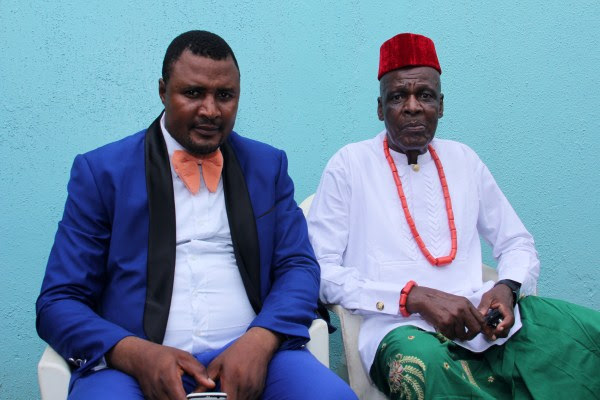
Apollo 13: My Father, Emmanuel Kejuo Lekan
Kingsley Obi Lekan reflects on the life of his father, Emmanuel Kejuo Lekan — Apollo 13 — and what his generosity, resilience, work, family and enduring smile have taught him about measuring a life.
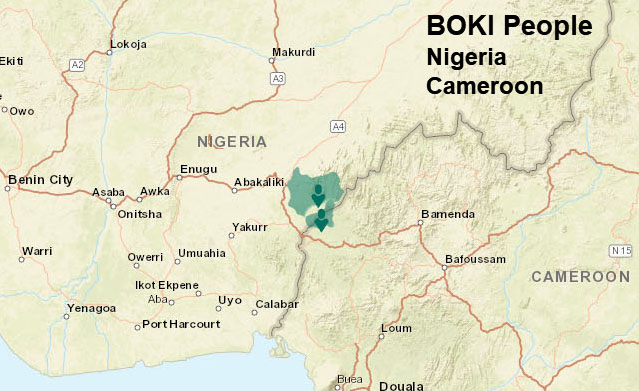
A Chronology of Bokyi History
A developing chronology of Bokyi history from colonial contact and Native Courts to the creation of Boki Local Government Area, preserving verified records, community history and questions requiring further research.