CLARIFICATION OF BOKYI NAMING DEBATE
Kingsley Obi Lekan examines the Boki–Bokyi naming debate and calls for historical and linguistic research, documentation and preservation of the Bokyi language and identity.
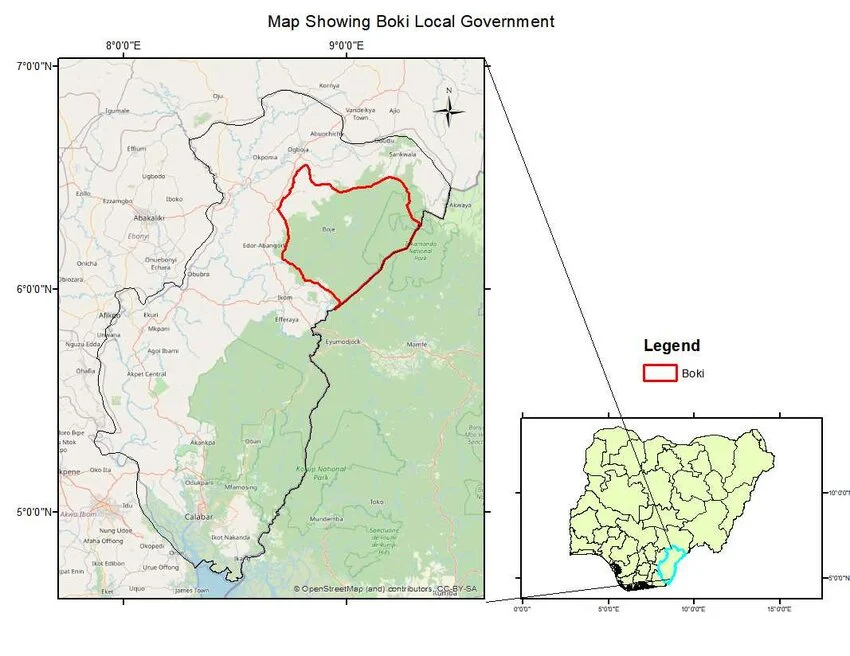
I have followed the very interesting discussion on Boki and Bokyi, and I think we have reached the point where we should move the conversation from strongly held opinions to evidence, scholarship and, ultimately, action.
First, we should separate four questions that are presently being discussed as though they were one:
1. What is the indigenous name by which our ancestors identified themselves?
2. What is the proper name of our people?
3. What is the proper name of our language?
4. What is the official name presently recognised by government for our Local Government Area?
These questions may have related answers, but they are not necessarily the same question.
THE PRESENT STATE OF THINGS
As things stand today, Boki Local Government Area is the official governmental name. We have Boki LGA, Ikom/Boki Federal Constituency and other official usages. That is simply the present administrative reality.
But that does not, by itself, settle the historical and linguistic question of what our people originally called themselves.
There is also substantial linguistic usage supporting Bokyi. Bokyi is internationally documented as a distinct language, with the ISO 639-3 code bky, and scholarly literature describes it as a multi-dialect language spoken in Cross River State and parts of Cameroon.
Its varieties include Abo, Irruan, Boje, Osokom and several others.
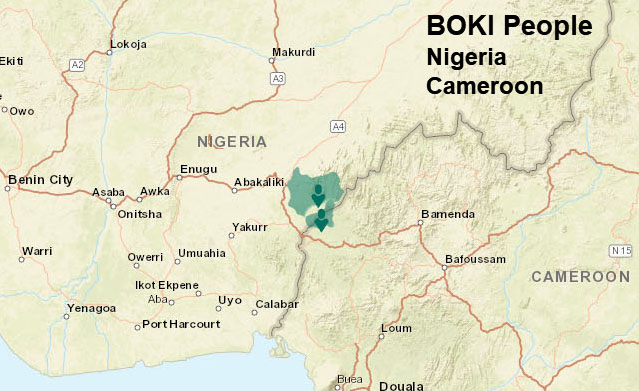
Therefore, one point we should be able to put behind us is the argument over whether Bokyi is a language or merely a dialect.
Bokyi is a language.
Abo, Irruan, Boje, Osokom and the other recognised varieties are dialects or varieties of that language. We should not confuse a language with the dialects existing within it.
THE QUESTION THAT REMAINS
The more difficult question is whether Boki properly denotes the people while Bokyi denotes only the language, or whether Bokyi is the indigenous name of both the people and their language, with Boki being a later variant, adaptation or administrative spelling.
I do not think this question should be settled by saying:
“A Reverend said so.”
“Our elders said so.”
“Everybody knows it.”
Or:
“The majority believes it.”
Neither should we dismiss the work of Rev. Brunce or any missionary, translator, elder or scholar merely because he was not Bokyi.
If he participated in translating or documenting our language, his work is evidence to be examined. It is not an authority beyond questioning, but neither should it be discarded without examination.
The same standard should apply to all sides.
Those who say Boki means the people and Bokyi means the language should produce the linguistic and historical evidence establishing that distinction.
Those who say Bokyi has always been the name of both the people and language and that Boki arose through colonial misspelling should also produce the historical records establishing when, where and how the alteration occurred.
That is how we turn an argument into scholarship.
FROM ARGUMENT TO RESEARCH
And here, perhaps, is where this debate can become extremely valuable to us.
Instead of spending another week telling one another who is right and wrong, why don't we establish an Ochibe Bokyi Language, History and Orthography Working Group?
Let us bring together our linguists, historians, anthropologists, traditional historians, clergy who have worked on Bible translation, elderly native speakers from the different dialect areas, teachers and Bokyi scholars at the University of Calabar, University of Cross River State and elsewhere.
Let them investigate the documentary record.
Let us search old missionary records, colonial correspondence, maps, gazettes, dictionaries, Bible translations, university theses, journal articles and oral histories.
Among the questions should be:
- When does Boki first appear in the written historical record?
- When does Bokyi first appear?
- What did our people call themselves before either spelling appeared in European records?
- What is the indigenous expression for a Bokyi person, Bokyi people, Bokyi land and Bokyi language across Abo, Irruan, Osokom, Boje and our other dialect areas?
- Do our different dialects agree on these terms?
- How did early missionaries and colonial administrators record them?
- Most importantly, what do the sounds, vocabulary and grammatical structure of our own language tell us?
These questions can be investigated. We do not have to speculate forever.
ENGLAND/ENGLISH AND FRANCE/FRENCH
The comparison with England/English and France/French is interesting, but it cannot prove the Bokyi case by itself.
Every language develops its own system for naming a territory, a people and their language.
We have to discover our own historical and linguistic evidence, rather than force an English or French naming pattern upon ourselves.
Similarly, asking whether somebody would naturally call himself a “Boki man” is useful evidence about contemporary self-identification, but even that should form part of a broader investigation involving speakers from the different Bokyi dialect communities and our people in Cameroon.
OUR VILLAGE AND COMMUNITY NAMES
There is another important matter raised in this discussion that should not be lost: our place names.
If communities such as Biakwan, Biajua, Lanale and others believe that government records or digital maps contain historically incorrect names, let us document them systematically.
We should establish the authentic indigenous name, its meaning, correct spelling, pronunciation, historical evidence and the incorrect variants presently appearing in government records and online maps.
Imagine an authoritative Bokyi Gazetteer containing every village and community in Bokyi land, its correct Bokyi spelling, pronunciation, meaning, dialect area, coordinates and historical variants.
That would be something we could hand to government agencies, schools, map providers, researchers and future generations.
THE BIGGER DANGER: LOSING THE LANGUAGE ITSELF
This takes me to what I consider the most important point.
Whether we finally establish that the preferred usage should be Boki people/Bokyi language, Bokyi people/Bokyi language, or some historically more accurate formulation, our language itself needs far more attention than this naming argument.
Can our children speak it?
Can they read it?
Can they write it?
Do we have an agreed and widely taught orthography?
Where are our Bokyi children's books?
Where are our dictionaries?
Where are our collections of proverbs, folktales, songs and oral histories?
Where is the digital archive containing the literature already produced by our scholars?
How much of the language of our grandparents are we losing every year as elderly speakers pass away?
Those questions should worry us even more than whether somebody omitted a “y.”
A PRACTICAL WAY FORWARD
I therefore strongly support the suggestion already made that this conversation should produce something permanent.
Let Ochibe Bokyi consider convening a Bokyi Language and Cultural Development Conference, preceded by a scholarly working group.
Let our academics gather the existing research.
Let our communities contribute oral history.
Let our elders provide indigenous knowledge.
Let our younger people build the digital infrastructure that preserves it.
If, after rigorous investigation, the evidence establishes that the official governmental spelling Boki should properly be Bokyi, we would then possess something much stronger than arguments on social media:
a documented scholarly case.
Such a case could form the basis for approaching the Cross River State Government, National Assembly, relevant federal institutions, INEC, mapping authorities and other bodies for appropriate standardisation.
If the research establishes a different historical explanation, we should have the intellectual courage to accept that too.
Nobody loses when the truth is established.
The person who says Boki is not less Bokyi.
The person who insists on Bokyi does not love our people more than everybody else.
The elder's knowledge matters.
The linguist's science matters.
The historian's documents matter.
The ordinary native speaker's pronunciation matters.
Our brothers and sisters in Cameroon matter.
And our children, who will inherit whatever we preserve for them, matter most of all.
Let this therefore not become another issue over which Bokyi people divide themselves.
Let the disagreement become the beginning of the most serious effort yet to document, standardise, teach, digitise and preserve Eja Bokyi.
If this debate produces that outcome, then both those who wrote Boki and those who insisted on Bokyi would have rendered a great service to our people.
Ese Bokyi.
Kingsley Obi Lekan, PhD
Further Reading
The related Founder’s Archive chronology, A Chronology of Bokyi History, documents the developing historical record of the Bokyi people, their communities and the territory that later became Boki Local Government Area.
The related Founder’s Archive memoir, The House That Felt Like a Village, is a personal account of growing up around family, work and the agricultural estates of old Cross River.
Continue in the archive

Before the Employment Agency
Kingsley Obi Lekan recounts the journey from Entertainment World International and Nollywood through teaching, early employment-agency work, EWIL Consulting and the incorporation of Capt Kingsley Consulting Limited.
Apollo 13: My Father, Emmanuel Kejuo Lekan
Kingsley Obi Lekan reflects on the life of his father, Emmanuel Kejuo Lekan — Apollo 13 — and what his generosity, resilience, work, family and enduring smile have taught him about measuring a life.
The House That Felt Like a Village
Kingsley Obi Lekan reflects on growing up around family, work and the agricultural estates of old Cross River, and how those early experiences shaped his understanding of opportunity, community and employment.